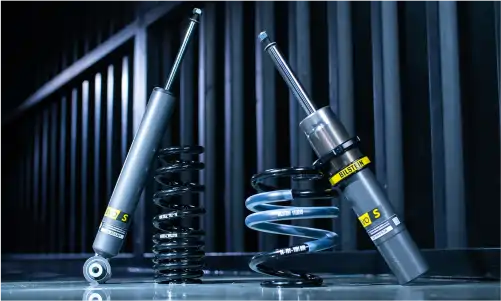
Vehicle Suspension Service at Precision Garage Wheels & Tires, located at Winter Haven, helps restore ride comfort, handling, and overall vehicle stability. Your suspension system is responsible for keeping your tires planted on the road, improving braking control, and reducing vibration over bumps and uneven surfaces. When components like shocks, struts, control arms, bushings, or ball joints begin to wear, you may notice pulling, clunking noises, bouncing, uneven tire wear, or a rough ride. Our experienced technicians inspect your suspension thoroughly, diagnose the source of the problem, and recommend the right repairs or upgrades for your vehicle and driving style. Whether you drive a daily commuter, lifted truck, or performance car, we deliver reliable results you can feel.
#1
#2
Book your appointment
#3

A failing suspension shows up as poor ride quality and unstable handling. If your vehicle dives when braking, leans in turns, or feels shaky at speed, schedule an inspection. Uneven tire wear, clunking over bumps, or heavy steering are also common warning signs.

Our comprehensive suspension diagnostics identify worn or failing components affecting ride comfort and handling. We inspect shocks, struts, joints, bushings, and steering parts to pinpoint issues early, helping prevent uneven tire wear and costly repairs.
Misalignment can make your vehicle pull to one side, reduce steering precision, and affect braking stability. It also adds strain to suspension components over time. If you feel drifting, vibration, or an off-center wheel, schedule an alignment check soon.
Your suspension keeps the vehicle stable, absorbs bumps, maintains tire contact with the road, and supports safe steering, braking, and handling.
Clunking noises, excessive bouncing, uneven tire wear, pulling, nose-diving while braking, drifting in turns, or a rough, shaky ride.
We perform a road test (when needed), visual inspection, and check components like shocks/struts, control arms, ball joints, bushings, tie rods, and wheel bearings.
Both control bounce and stability. Struts also support the vehicle structure and affect alignment angles, while shocks primarily dampen motion.
Yes. Worn shocks/struts, loose components, or damaged bushings can cause cupping, feathering, and rapid wear by reducing consistent road contact.
Often, yes—especially after replacing struts, control arms, tie rods, or other steering/suspension parts that affect wheel angles.
It depends on driving conditions, but many shocks/struts wear out around 50,000–100,000 miles. Rough roads, heavy loads, and off-road use can shorten lifespan.
It can be risky. Worn components reduce braking control, stability, and traction—especially at higher speeds or in wet conditions. It’s best to get it checked promptly.
In many cases, yes. Replacing shocks/struts in pairs helps maintain balanced handling and consistent ride height and performance.
Problems can worsen quickly, leading to longer stopping distances, poor handling, damaged tires, and added wear on steering and drivetrain components—often increasing repair costs.